
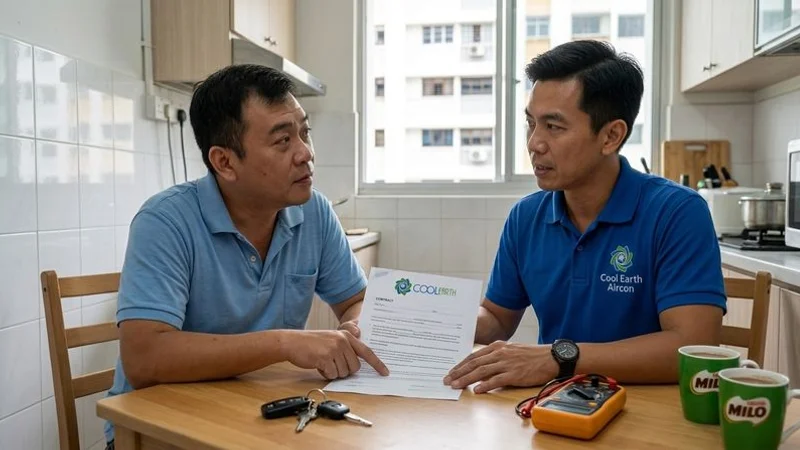
There is no universal right answer to the contract question. What works beautifully for a five-bedroom condo with heavy daily usage often makes zero sense for a studio rental that runs aircon two hours a night. The trick is knowing which side of that line your household sits on.
We get this question almost every week at CoolX Aircon, usually from homeowners who just received an unexpectedly large SP Group bill and started wondering if they could have prevented it. Below is the same breakdown we walk them through on the phone.
What an Annual Contract Actually Covers
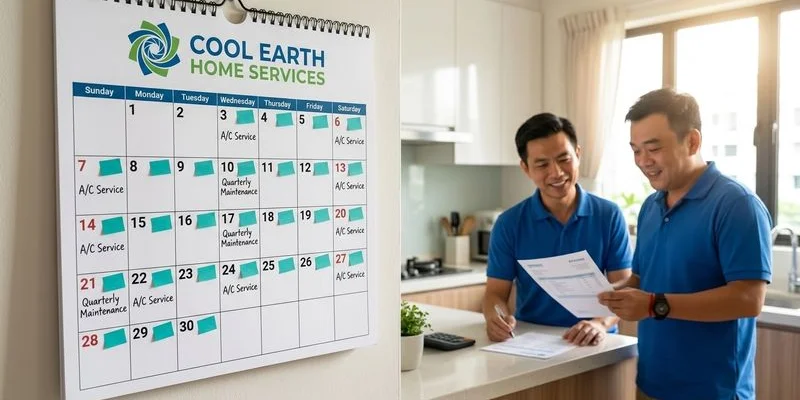
A maintenance contract is a fixed-fee agreement that bundles scheduled servicing visits across a year, typically three or four visits to match quarterly intervals. Reputable plans include at least the following per visit:
- Filter washing and evaporator coil clearing
- Condensate drain flushing
- Refrigerant pressure checks for R32 or R410A
- Electrical safety verification
- Priority booking during peak demand months
- Discounted rates on chemical washes and gas top-ups
Some plans add annual chemical wash cycles or workmanship warranties of 60 to 90 days on repair work. These extras vary significantly between providers, so always read the fine print before signing.
What Ad-Hoc Servicing Looks Like
Ad-hoc means you call only when something goes wrong. No recurring commitment, no monthly fees, no schedule. You pay the standard market rate per visit and choose a different contractor every time if you want.
The freedom is real, but it comes with two hidden costs. First, you tend to forget or delay servicing until the unit is already suffering. Second, one-off bookings almost always price higher than contract rates for the same work. A standalone chemical wash costs S$80 to S$130 per unit in 2026 on an ad-hoc basis, while contract clients pay meaningfully less.
The Real Numbers for a System 3
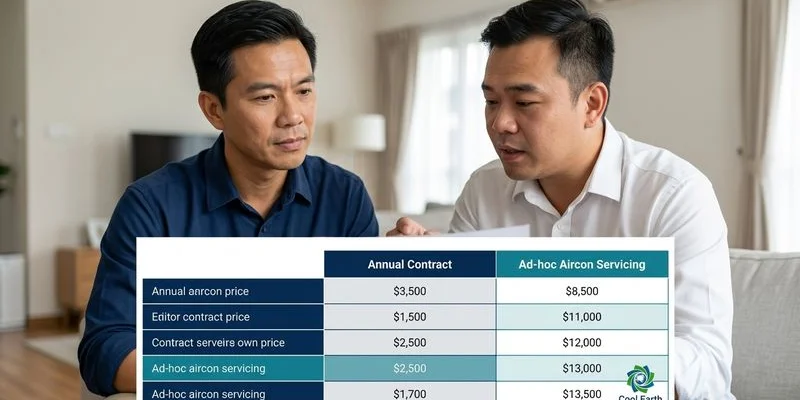
Most Singapore households run System 3 setups with three indoor units on one condenser. Here is how the two approaches stack up over a year:
| Metric | Annual Contract (System 3) | Ad-Hoc Servicing (System 3) |
|---|---|---|
| Frequency | 4 visits per year | 4 separate bookings |
| Per-Visit Cost | S$45 to S$70 | S$50 to S$80 per unit |
| Annual Total | S$180 to S$280 | S$600 to S$960 |
| Troubleshooting Fee | Often waived | S$30 to S$50 per trip |
| Chemical Wash Add-On | 10 to 20 percent discount | Full price |
A contract typically saves 40 to 60 percent against four separate ad-hoc bookings. When you factor in troubleshooting charges and chemical wash rate differences, the gap widens further.
Beyond the Numbers: Why Contracts Win for Most Homes
Tracking System Health Over Time
One underrated benefit is the maintenance history that builds up across visits. A contracted technician sees your coil condition in January, March, June, and September. That continuity matters when something starts to shift.
A slow refrigerant pressure drop caught in March saves you from a melted compressor in July. Our records show that well-maintained systems regularly cross the 12 to 15 year lifespan mark, while neglected units start failing at five to seven years.
Drain Line Compliance
Town councils in Singapore can issue fines of up to S$1,000 for aircon units that drip onto shared walkways. The most common cause is a blocked condensate line, and the most effective prevention is scheduled drain flushing every quarter. Contract holders almost never face this problem because the clean-out is built into every visit.
Beating the Demand Surge
Between April and May, and again in September and October, Singapore typically sees a surge in aircon service requests. Ad-hoc customers end up waiting seven to ten days during these peaks while contract clients jump the queue. When your bedroom is sweltering at 32°C, that difference is everything.
When Ad-Hoc Actually Makes Sense
A maintenance contract is not automatically the right call. Four situations push households toward pay-as-you-go:
- Short-term leases: Tenants with less than six months remaining rarely benefit from an annual commitment.
- Single-unit setups: Studios with one fancoil lose most of the bulk-pricing advantage.
- Infrequently used spaces: Guest rooms or seasonal rentals need less intensive upkeep.
- Deal-hunting owners: Some homeowners genuinely prefer shopping around for each service.
Even in these cases, manufacturer warranties usually require documented professional cleaning at least twice a year to stay valid. Dropping below that threshold voids your warranty protection, which matters if anything major breaks. Our guide on servicing frequency has the full schedule recommendations.
What to Verify Before Signing
Cheap contracts often hide thin coverage. Before handing over payment, verify that the agreement explicitly includes:
- Evaporator coil cleaning, not just filter rinsing
- Condensate drain vacuuming and flushing
- Outdoor condenser inspection (some budget plans skip this entirely)
- Blower wheel checks for balance and dirt
- Clear cancellation terms with reasonable notice periods
Ask the provider to walk you through a typical service step by step. If they cannot answer clearly, that is a signal to look elsewhere. For specific rates, our transparent servicing pricing is publicly listed.
Our Verdict
For any household running a System 2 or larger, an annual contract almost always wins on both cost and reliability. The upfront commitment turns into real savings, priority booking during peak months, and fewer emergency breakdowns.
The main exception is genuinely light users who run aircon sparingly and accept the warranty trade-off. Even then, we suggest at least two scheduled visits per year to keep the system compliant and safe.
If you want a plan scoped to your exact setup, reach out to our team for a tailored quote. Our CoolX Aircon contracts start around S$180 for three units per year with a 90-day workmanship guarantee across all covered work.

About the Author
Kok Wai Keong
Founder & Principal Technician
Mr. Kok founded CoolX Aircon Servicing in 2016 after 15 years handling commercial and industrial cooling systems. He leads a team committed to eco-friendly maintenance and transparent pricing.