
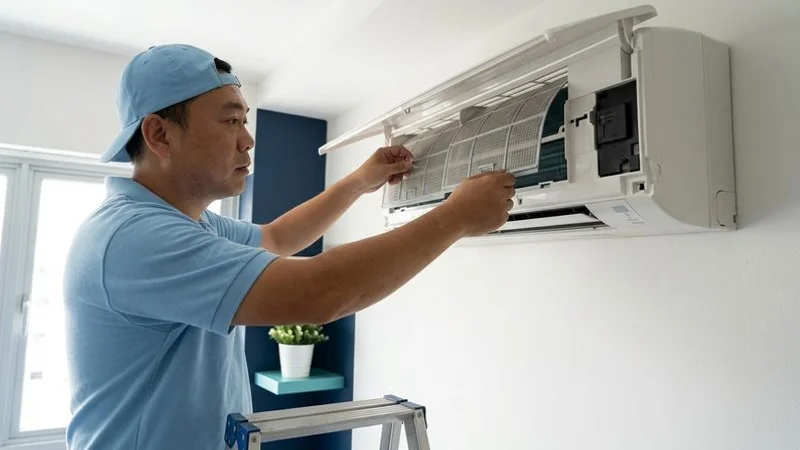
Professional servicing keeps your aircon healthy, but the real wear happens in the 13 weeks between visits. That gap is where dust accumulates, drain lines slowly clog, and blower wheels start collecting a fine film of grime. A few simple habits during that window make a dramatic difference.
CoolX Aircon technicians see the same patterns across thousands of homes. Owners who do nothing between services end up with units that perform noticeably worse three months after each visit. Owners who follow a basic upkeep routine can actually stretch their intervals and keep efficiency high throughout.
None of what follows requires specialist tools or technical training. You just need a few minutes every couple of weeks and the willingness to develop a habit.
The Filter Routine That Changes Everything
Dirty mesh filters are the number one reason household aircons feel weak. A clogged filter forces the blower to work harder while simultaneously starving the evaporator coils of the airflow they need to transfer heat. A clean filter can restore airflow capacity by half in a single rinse.
| Filter State | Airflow | Electricity Draw |
|---|---|---|
| Clean | 100 percent | Normal |
| Mildly Dusty | 75 percent | About 10 percent higher |
| Heavily Clogged | Under 50 percent | 15 percent higher or more |
The process takes less than 10 minutes:
- Switch the unit off and wait a minute for the fan to stop.
- Lift the front panel gently. Most designs click open with a soft upward pull.
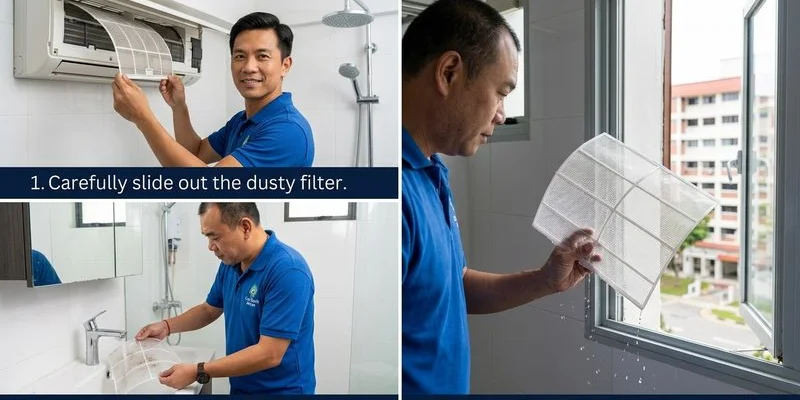
- Slide out the mesh filters.
- Rinse them under lukewarm water, scrubbing stubborn spots with a soft brush and a drop of dish soap.
- Shake off excess water and air dry completely before reinstalling.
Never slide a wet filter back in. The dampness creates ideal conditions for Aspergillus mould, which thrives in our 80-plus percent humidity. Pet owners should check filters weekly, not fortnightly, because dander and fur accumulate fast enough to fully clog a screen in 10 days.
Keep the Outdoor Condenser Breathing
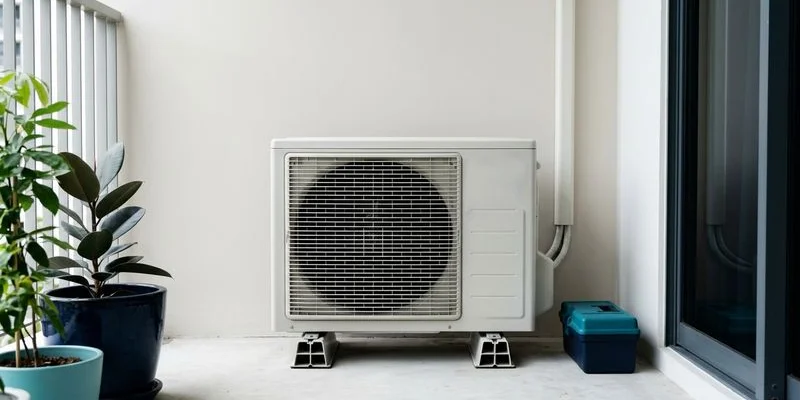
The condenser unit outside your flat does the heavy lifting. It needs clear airflow around all sides to dissipate the heat it removes from your rooms. Most homeowners forget it even exists until something goes wrong.
What to Check Monthly
- Remove fallen leaves, stray plastic bags, or bird nests caught around the bracket
- Maintain at least 30cm of clearance on all sides of the fan
- Never stack mops, buckets, or storage items on top of the unit
- Gently brush visible dust off the aluminium fins with a soft-bristle brush
Skip the pressure washer. Aluminium fins bend easily and blocked airflow drastically hurts efficiency. BCA regulations also apply to external unit maintenance, and neglected outdoor equipment that poses safety hazards can trigger fines of up to S$5,000 in serious cases.
Preventive Drain Care
Blocked drains are by far the most common source of water damage from aircon units in Singapore. The process is predictable: dust and algae mix with condensation, form a jelly-like plug inside the PVC drain pipe, and force water to overflow from the drip tray instead.
You can slow this down without any tools:
- Locate where the drain pipe exits your wall or floor trap
- Check the outlet visibly for blockages
- Pour a small amount of diluted white vinegar (1 part to 10 parts water) through the drain opening if you can access it
Running this simple flush every three months aligns nicely with your professional servicing schedule. Avoid bleach at all costs. Concentrated bleach degrades standard PVC pipes and can cause hidden leaks inside your walls.
Set the Thermostat Smartly
Our crews still find homes blasting their units at 18°C, believing the unit cools faster at lower settings. It does not. The compressor runs at the same speed regardless of your target temperature. Setting 18°C instead of 25°C just forces the machine to keep running well past the point where a room would otherwise feel comfortable.
| Thermostat Setting | Compressor Load | Estimated Cost |
|---|---|---|
| 18°C | Continuous maximum | Very high |
| 22°C | Frequent cycling | Moderate |
| 25°C | Normal efficiency | Optimal |
Every degree above 25°C reduces power consumption by roughly 3 percent. If 25°C feels warm, pair the aircon with a ceiling fan or standing fan. The air movement creates a wind-chill effect that makes the same air feel 2 to 3°C cooler on skin.
The Fan Mode Trick Nobody Talks About
After you finish cooling a room, run fan mode for 10 to 15 minutes before shutting off entirely. This simple habit dries out the moisture lingering on the evaporator coils, which is the main reason damp units develop that musty old-sock smell.
Many modern units automate this:
- Daikin uses a “Mould-Proof Operation” that runs the fan automatically
- Mitsubishi’s “Auto Dry” function inhibits bacterial growth after cooldown
- Panasonic’s internal cleaning modes and nanoe-G technology handle it differently
Manually running fan mode works just as well if your unit lacks these features.
Weekly Visual Inspection
Spend two minutes a week looking at your indoor unit. The warning signs are almost always visible before a breakdown, and catching them early saves serious money.
What to Watch For
- Frost or ice forming on the copper pipes, usually a refrigerant issue
- Unusual rattling, squealing, or grinding from inside the casing
- Chemical odours on startup, which usually signal mould
- Uneven airflow out of the vents
- Water stains forming below the unit on the wall
Use your phone torch to peek through the louvres at the blower wheel. Dark spots are mould colonies that need professional chemical treatment before they worsen. If any of these signs show up, book an inspection rather than hoping it resolves itself.
What You Should Never DIY
Some jobs cross the line into territory where amateurs get hurt or damage expensive hardware. Leave the following to licensed technicians:
- Topping up refrigerant gas (R32 is mildly flammable and requires specific tools)
- Dismantling the indoor unit casing
- Electrical repairs or capacitor replacement
- Professional chemical cleaning, which uses industrial-grade solutions
The DIY habits in this guide extend the life of your system and make the next professional servicing visit far more productive. Pair them with regular professional care and your cooling system will stay reliable for well over a decade.

About the Author
Kok Wai Keong
Founder & Principal Technician
Mr. Kok founded CoolX Aircon Servicing in 2016 after 15 years handling commercial and industrial cooling systems. He leads a team committed to eco-friendly maintenance and transparent pricing.