
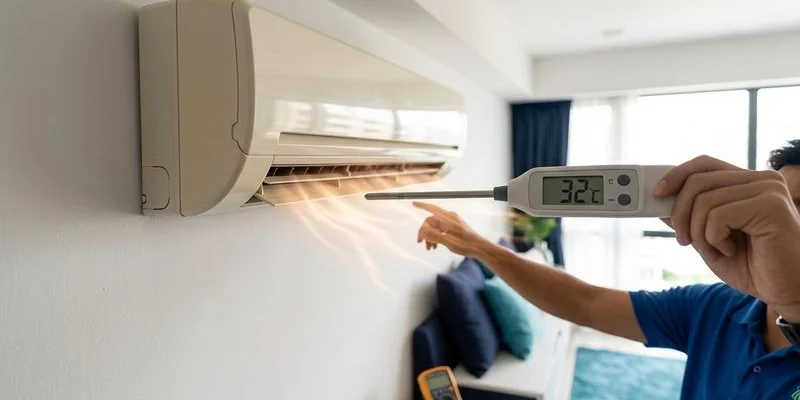
Something feels off the moment you walk into your bedroom. The unit hums like normal, the display reads 22°C, and yet the air drifting out feels almost as warm as the corridor behind you. If that scene sounds familiar, your cooling system is probably trying to tell you something it cannot say out loud.
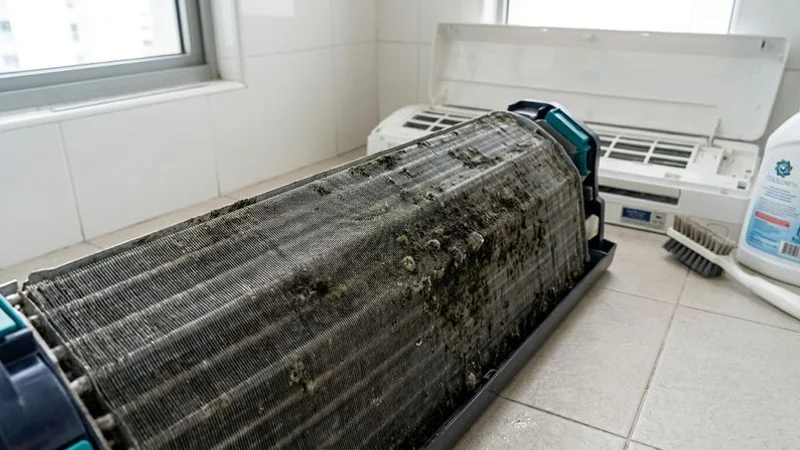
Most owners assume a routine quarterly clean covers every problem. The reality our CoolX Aircon crews see across Singapore is different. Many units quietly develop a layer of biological grime that surface cleaning just cannot reach. A proper chemical treatment is the specific fix that removes what brushes and vacuums miss.
Why This Topic Matters Now
Aircon complaints spike every year during the monsoon transitions, when humidity readings climb above 85 percent. Moist coils and slow drainage create the perfect storm for mould, bacterial colonies, and jelly-like sludge inside the drainage line. The warning signs below are the ones our technicians keep seeing in HDB flats, shophouse offices, and older condo blocks.
Read through carefully. Acting on even one of these symptoms early can save your compressor and your electricity budget.
Sign 1: The Vents Feel Tired
The clearest tell is airflow that just feels sluggish. Your compressor is running, the fan is spinning, but the breeze coming out is lukewarm and soft. This happens because dust and microbial film coat the evaporator fins, blocking heat transfer where it matters most.
A coating as thin as one millimetre on those aluminium fins is enough to drop cooling efficiency by around 20 percent. Lowering the remote to 16°C to compensate simply burns more electricity without solving the underlying problem. A deep chemical wash dismantles the front casing so technicians can clear both the front and rear of the coil, reaching the grime a regular clean leaves behind.
Quick Airflow Self-Check
- Warm, weak breeze: Fouled coils, chemical wash recommended.
- Cold air that fades after 20 minutes: Likely a refrigerant pressure issue.
- No airflow at all: Suspect a failing blower motor or capacitor.
Knowing which category you fall into saves you from paying for the wrong intervention.
Sign 2: That Unmistakable Musty Smell
Singaporeans know the smell. It hits you within seconds of switching the unit on, an old-sock aroma that cling to clothes and pillows. This odour is the calling card of mould colonies living inside your blower wheel and drain pan.
Our crews encounter this most often in flats along coastal neighbourhoods such as Bedok, where damp sea air speeds up biological growth inside the casing. The fix is not a scented spray or a filter rinse. Professional-grade alkaline solutions break the mould down at the root and sanitise the wet surfaces properly.
Indoor mould is not just unpleasant. Health studies consistently link damp indoor environments to flare-ups in asthma, sinus irritation, and chronic coughs, particularly in young children and elderly residents.
Sign 3: Water Creeping Down the Wall
Drip marks on your paintwork are never a minor issue. The most common cause is a clogged condensate drainage line, where algae and dust combine to form a gelatinous plug that refuses to move with a simple vacuum flush.
Recurring leaks tell a deeper story. Severely fouled coils cause condensation to drip off at odd angles, missing the drip tray entirely. Left alone, that water slowly ruins ceiling plaster, warps parquet, and stains laminate flooring.
Flush vs Chemical Wash Comparison
| Service Type | Typical 2026 Cost (Single Unit) | Effect on Algae and Leaks |
|---|---|---|
| Standard Servicing | S$25 to S$45 | Clears surface blockages, algae returns within weeks. |
| Chemical Wash | S$80 to S$120 | Sanitises the drain pan, prevents recurring leaks. |
A chemical wash treats the drain pan and coils with an antimicrobial solution, which destroys the sludge and restores normal drainage.
Sign 4: Rattles, Buzzes, and Mystery Clicks
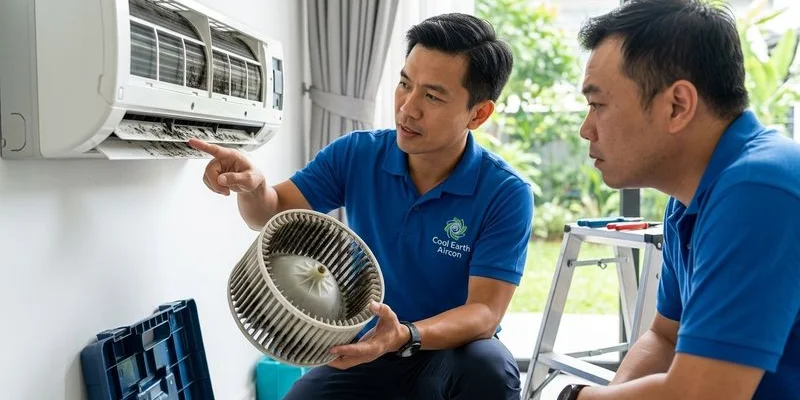
Unusual noise is often the first symptom people brush off. A rhythmic thump, a faint rattle, or a buzzing vibration usually points to an unbalanced blower wheel. That cylindrical fan spins thousands of times per hour, and when dust cakes unevenly on its fins, the wheel goes slightly out of balance.
The strain travels up to the motor bearings, which are far more expensive to replace than a blower wheel cleaning. A chemical wash uses high-pressure jets to strip the built-up grime without damaging the delicate plastic fins. In our experience servicing heavy-use HDB units around Tampines, this step alone often eliminates years of nagging noise complaints.
Sign 5: Creeping Electricity Bills
This is the sign nobody talks about enough. You have not changed your habits. Nobody moved in. The thermostat is still on 25°C. Yet the SP Group bill keeps climbing. The culprit is often a dirty coil forcing the compressor to run longer for the same cooling result.
Field data consistently shows that a heavily fouled system can push compressor energy consumption up by 30 to 40 percent. On a typical 12,000 BTU bedroom unit, that adds roughly S$25 to S$40 a month to your utilities. A chemical wash usually pays itself back within a single quarter through restored efficiency alone.
When to Act
Waiting for all five signs to appear is a costly mistake. Even one persistent symptom is reason enough to book a proper deep clean.
Our recommended timeline:
- Regular residential use: Chemical wash once a year.
- Heavy usage above 12 hours daily: Twice a year.
- Smokers or pet owners: Closer to every eight months.
Early intervention always costs less than emergency repairs. If any of these signs ring true for your home, reach out to our team to arrange a professional inspection. For a deeper look at the process itself, our guide on what happens during a chemical wash walks you through every step.

About the Author
Kok Wai Keong
Founder & Principal Technician
Mr. Kok founded CoolX Aircon Servicing in 2016 after 15 years handling commercial and industrial cooling systems. He leads a team committed to eco-friendly maintenance and transparent pricing.